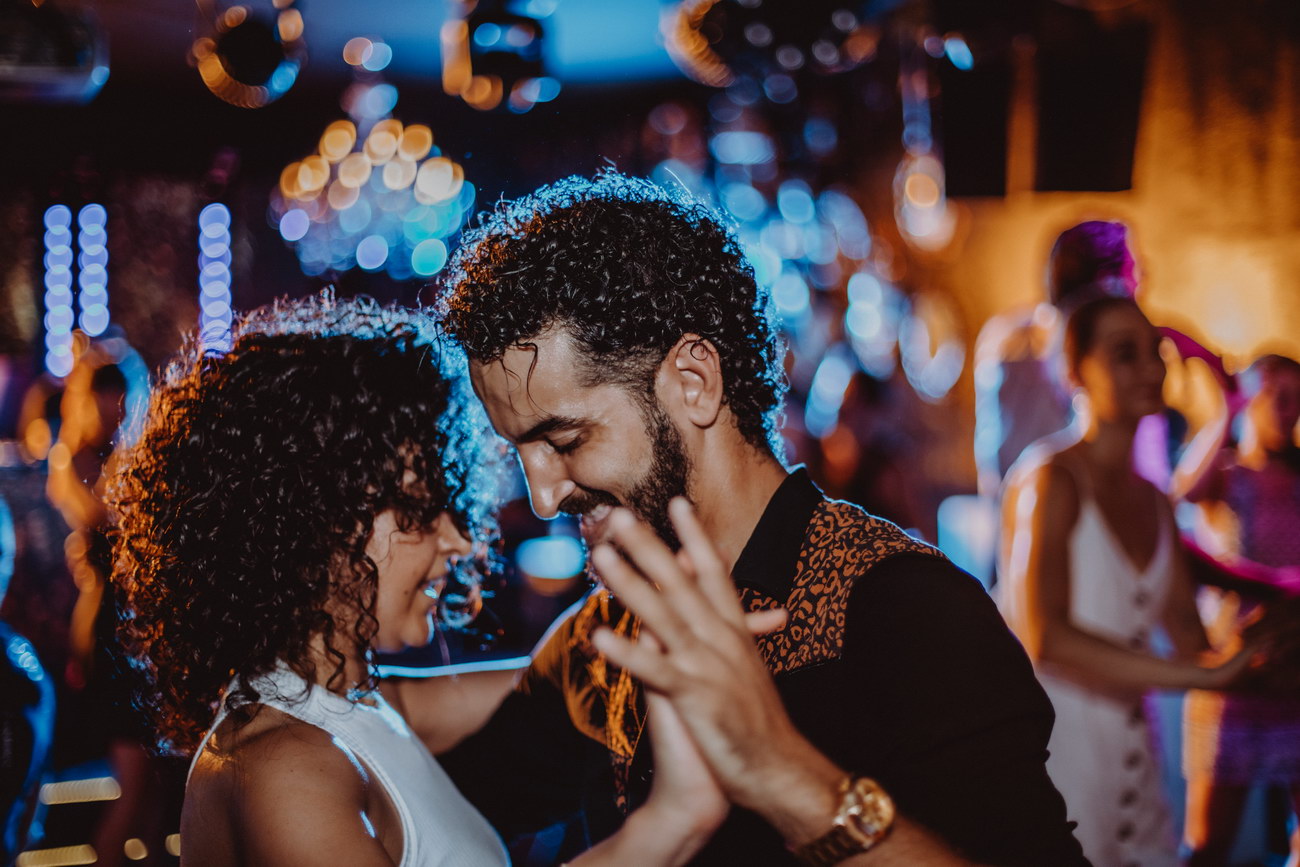
The origins of Kizomba
Kizomba is a dance and music genre that originated in the 1980s in Angola. Both the dance and the music combine traditional African elements, in particular Semba (a joyful, energetic couple dance that is still danced at Kizomba parties today), with modern influences.
Musically, Kizomba was heavily inspired by the zouk of French Caribbean and developed further through electronic influences. In the 1990s, Kizomba found its way to Europe via Portugal and spread rapidly.
The word ‘Kizomba’ comes from the Angolan language Kimbundu and means ‘party, celebration’ – which is exactly what is reflected in the atmosphere of this dance.
Kizomba styles & related dances
Kizomba
A gentle, soulful dance in which the partners move with flowing, harmonious movements to the music. The close connection between the dance partners makes Kizomba a particularly expressive and emotional dance.
Tarraxha – The sensual wave movement
The term Tarraxha is often used in the same breath as Kizomba. This style is characterised by the wave-like movements of the followers' upper bodies, which are led by the leader. This technique gives the dance a sensual dynamism and a strong sense of musicality.
Semba – the energetic sister of Kizomba
Semba is the predecessor of Kizomba and is often described as the faster, playful variant. Similar to Tango & Milonga, there is also this contrast between flowing, calm movements and fast, energetic steps in Kizomba & Semba.
Free leading – what makes Kizomba special
Unlike salsa, kizomba does not follow a set basic rhythm. Instead, the dance is completely individually led, opening up a whole new dimension of partner work for dancers.
Among the most famous dance couples and ambassadors of Kizomba are Isabelle & Felicien, who have made this dance popular worldwide.
What will I learn at Bailamos Salsa?
We teach Kizomba in a structured and methodical way to give you the best possible access to this unique dance.
Our Kizomba Levels
Basic 1, Basic 2, Basic 3 (Beginner)
Intermediate Open Level (Intermediate)
Advanced Open Level (Advanced)
Flexible Open Level Courses
You can join our Open Level classes at any time! Participants stay at one level for several cycles (8 weeks each) until they feel ready to move on to the next level.